Blog / Bluffton Ford Dealer

Blog

All Bluffton Ford Dealer 2025 Ford Models Bluffton Ford Service Ford Explorer Ford Mustang Mach-E

6 Reasons to Love the 2025 Ford Escape

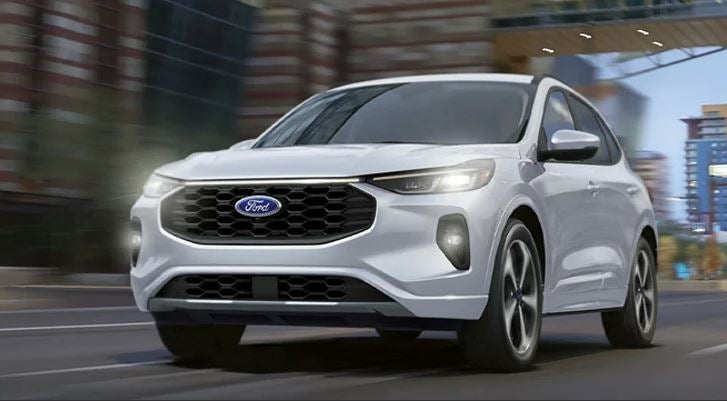
With its style, practicality, and technology, the 2025 Ford Escape has the versatility to handle your daily commute, weekly errands, and weekend fun equally well. Let's explore some of the features people love most about this compact SUV. more 6 Reasons to Love the 2025 Ford Escape Stylish Exterior The Escape has a fun, aerodynamic design that attracts attention. It has a distinctive black grille, rear spoiler, and 17-inch silver-painted wheels, giving it a sporty look. It also has signature LED lights and dual chrome exhaust tips that add to its sleek appearance. Comfortable Interior The spacious Escape can seat up to five on its two cloth-covered rows. Dual-zone electronic automatic temperature control comes standard, giving the driver and front passenger the ability to control their own settings. It has intelligent access with push-button start, and remote start is available. Fuel Efficiency The Escape is powered by a fuel-efficient combination of 1.5L EcoBoost engine and 8-speed automatic transmission. It gets 27 mpg in the city and 34 mpg on the highway. Driver-Assist Features Ford Co-Pilot360 comes standard on the Escape, so it's loaded with safety and driver-assist features. For example, the blind spot information system with cross-traffic alert warns you of vehicles, cyclists, and pedestrians who are next to you but outside your range of vision. This helps make lane changes safer. Other features include: Lane-keeping system Pre-collision assist Pedestrian detection Forward collision warning Post-collision braking Infotainment and Connectivity The Escape is equipped with the SYNC 4 infotainment system, featuring an 8-inch LCD touchscreen with voice recognition. It has wireless Apple CarPlay and Android Auto compatibility, so you have easy access to your music, calls, apps, and navigation. It has a 6-speaker AM/FM stereo and SiriusXM with 360L. It also comes with Wi-Fi hotspot capabilities, so you never have to lose your connection. Cargo Space The Escape has a spacious cargo area behind the second row. If that's not enough space, that row can fold down to accommodate more cargo. With the seat fully folded, you have a total of 65.4 cubic feet of space for storing your larger items. A manual liftgate gives you easy access to the cargo area. A power liftgate is also available, and it comes standard on some higher trims. There are also several places in the Escape for storing smaller items. For example, there are convenient hooks for hanging garments and 8 cupholders for holding your drinks. Other storage areas include: Overhead console with sunglasses storage Center floor console Center console with media bin Glove box Now that you've heard about the standout features of the Escape, are you ready to see it for yourself? Come see us at Family Ford of Bluffton in Bluffton, IN, and take a test drive.

5 Innovative Features of the 2025 Ford Mustang Mach-E

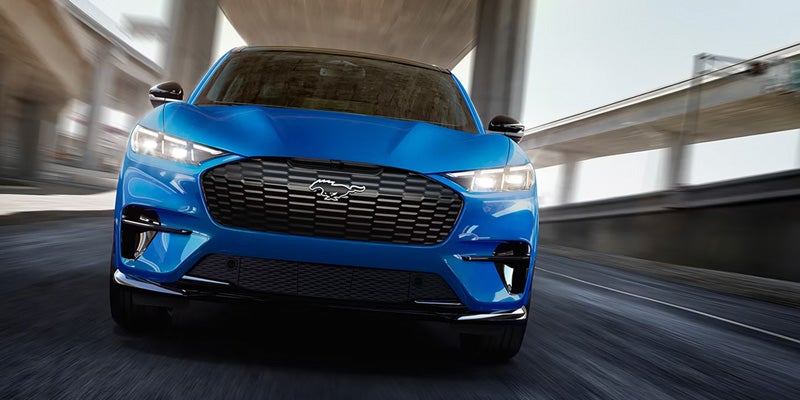
The 2025 Ford Mustang Mach E is the kind of electric vehicle that makes shoppers ask a different set of questions than they would with a gas powered SUV. Instead of focusing only on horsepower or cargo room, buyers want to understand how the vehicle manages winter temperatures, how it handles highway driving assistance, how it estimates range, and whether charging will feel simple enough for daily life. That is what makes the most important innovations in the 2025 Ford Mustang Mach E different from a typical feature list. They are not just there to sound advanced. They are there to remove friction from EV ownership and help drivers feel more confident using the vehicle every day. Why the 2025 Ford Mustang Mach E heat pump matters more than it sounds One of the most useful additions for many shoppers is the standard heat pump on the 2025 Ford Mustang Mach E. A heat pump is a thermal management system that moves heat rather than creating all cabin heat through resistance heating alone. In practical terms, that matters because heating the cabin in an electric vehicle can draw meaningful energy from the battery, especially when temperatures drop. Ford explains that the vapor injection heat pump in the 2025 Mustang Mach E is designed to improve efficiency by using thermal energy more effectively in colder conditions. That technical explanation matters because cold weather is one of the biggest sources of uncertainty for EV shoppers. Many buyers are not asking whether the 2025 Ford Mustang Mach E can handle winter. They are asking whether winter will make the vehicle less convenient to own. The heat pump matters because it reduces the energy penalty associated with keeping the cabin comfortable. That does not eliminate every cold weather effect on range, but it does make the vehicle more efficient than it would be if it relied more heavily on resistance heating for cabin comfort. more This is where a shopper should slow down and evaluate how the vehicle will actually be used. A driver with a short commute and home charging access may simply appreciate the efficiency gain as a bonus. A driver with a longer daily route, winter travel demands, or less flexible charging routines should see the heat pump as a much more meaningful ownership feature. In the 2025 Ford Mustang Mach E, this is not just an engineering detail. It changes how the vehicle manages comfort and battery energy at the same time, which is exactly the kind of innovation that improves confidence in an electric vehicle. BlueCruise changes the way the 2025 Ford Mustang Mach E handles highway driving Shoppers often hear the phrase hands free highway driving and assume it is just another driver assist label. In the 2025 Ford Mustang Mach E, BlueCruise is more specific than that. BlueCruise is Ford’s hands free highway system that works on designated divided highways called Blue Zones and builds on Adaptive Cruise Control and Lane Centering to help with steering, braking, and acceleration in those approved conditions. Ford positions it as a feature designed to reduce the workload of long highway drives rather than replace attentive driving. That distinction matters because a lot of driver assistance systems sound similar until you understand where they are intended to be used. Basic adaptive cruise control helps manage following distance. Lane centering helps keep the vehicle positioned more consistently. BlueCruise adds another layer by allowing hands free operation in approved highway environments while monitoring driver attention. For a shopper evaluating the 2025 Ford Mustang Mach E as a commuter vehicle or road trip vehicle, that changes the question from what features does it have to how much fatigue can it reduce on repeated highway drives. For buyers deciding whether BlueCruise is a novelty or a serious ownership advantage, a few evaluation points matter most: How often the 2025 Ford Mustang Mach E will be used on divided highways Whether the buyer values reduced steering workload on longer trips How important driver assistance confidence is compared to standard cruise based systems The buyer implication is straightforward. If most driving happens on local roads, BlueCruise may not be the deciding feature. If the 2025 Ford Mustang Mach E will regularly cover highway miles, it becomes much more important because it changes how tiring those miles feel over time. That is a stronger reason to care about it than branding alone. Range management in the 2025 Ford Mustang Mach E is not just about battery size Many EV shoppers start by looking at battery range as a single fixed number, but the 2025 Ford Mustang Mach E uses more than one system to turn battery capacity into useful driving confidence. Ford’s Intelligent Range system estimates remaining range by factoring in driving speed, traffic patterns, terrain, and ambient temperature. Ford also notes that charging times vary by battery type and charging method, with a 2025 Mustang Mach E standard range battery able to charge from 10 percent to 80 percent in about 32 minutes on a DC fast charger under the right conditions. The concept here is important. Range in the 2025 Ford Mustang Mach E is not simply stored energy divided by miles. It is a dynamic estimate that keeps adjusting based on what the vehicle is experiencing. That makes Intelligent Range more useful than a static prediction because it reflects actual conditions instead of pretending every drive is the same. The direct answer to the shopper question is that the system works by combining environmental and behavioral inputs so the driver gets a more realistic estimate of what the battery can deliver. This is also where buyers need to evaluate the vehicle more carefully. Battery choice, drivetrain, climate, and charging routine all affect whether a specific 2025 Ford Mustang Mach E configuration is the right fit. A buyer who drives mostly predictable daily routes may prioritize home charging convenience and not worry much about public fast charging speed. A buyer who expects more highway travel should pay much closer attention to charging curve expectations, battery size, and how often route planning will depend on fast chargers. The most useful way to think about range in the 2025 Ford Mustang Mach E is through ownership pattern, not brochure math. Ask how far the vehicle needs to go between charges, how often that happens in winter, and whether the buyer wants more margin or simply enough capability for a routine schedule. That is what makes range management a real decision tool instead of a headline claim. Connected navigation in the 2025 Ford Mustang Mach E does more than replace a phone map Navigation matters more in an EV because the route itself can affect confidence, battery use, and charging timing. Ford’s Connected Navigation system includes live traffic information, route guidance, and offline map capability in supported vehicles. In the 2025 Ford Mustang Mach E, that kind of navigation matters because it works alongside range prediction and trip planning rather than functioning as a simple turn by turn feature. The concept is easy to miss if navigation is treated as just another screen feature. In a gas powered vehicle, the map mainly helps with directions and travel time. In the 2025 Ford Mustang Mach E, navigation has a larger job. It helps the driver understand where the vehicle is going, how conditions may affect the trip, and how range estimates need to adapt along the way. The direct answer to the shopper question is that connected navigation matters because EV route planning is not only about finding the road. It is about managing time, battery confidence, and charging decisions together. Buyers comparing EVs should evaluate whether the navigation system supports the kind of driving they actually do. Someone who stays local may care more about live traffic and interface clarity. Someone planning regional or longer travel should care much more about route confidence, offline map support, and how well the vehicle’s navigation tools work with range estimation. In the 2025 Ford Mustang Mach E, connected navigation is one of those features that becomes more valuable the farther the vehicle is asked to travel from routine home charging patterns. The most important innovation may be how the 2025 Ford Mustang Mach E simplifies ownership A lot of EV content focuses on performance and styling because those topics are easy to sell visually. What many shoppers actually need is reassurance that charging and day to day ownership will not feel like a separate project. Ford’s Power Promise program directly addresses that concern by centering home charging access and installation support as part of the EV ownership conversation. That matters because the easiest way to make an EV feel convenient is to make charging feel predictable from the beginning. The concept here is ownership simplification. Home charging is not just a hardware issue. It is the system that turns an EV from something a buyer is managing into something the buyer simply uses. The direct answer to the shopper question is that charging becomes easier when the vehicle, the charging solution, and the setup path are treated as one ownership process rather than three separate decisions. Ford’s support framing matters because it lowers the barrier for a buyer who likes the 2025 Ford Mustang Mach E but is still unsure about the logistics of living with an EV. For a shopper evaluating the 2025 Ford Mustang Mach E seriously, these are the ownership questions worth asking: Will home charging cover most weekly driving without inconvenience Does the buyer’s climate make the heat pump especially valuable Will highway travel make BlueCruise and route planning tools more meaningful Is the chosen battery setup aligned with the buyer’s normal schedule rather than an occasional edge case That is ultimately why these features deserve attention. The strongest innovations in the 2025 Ford Mustang Mach E are not the ones that sound futuristic in isolation. They are the ones that make an electric vehicle easier to understand, easier to plan around, and easier to trust in everyday use.

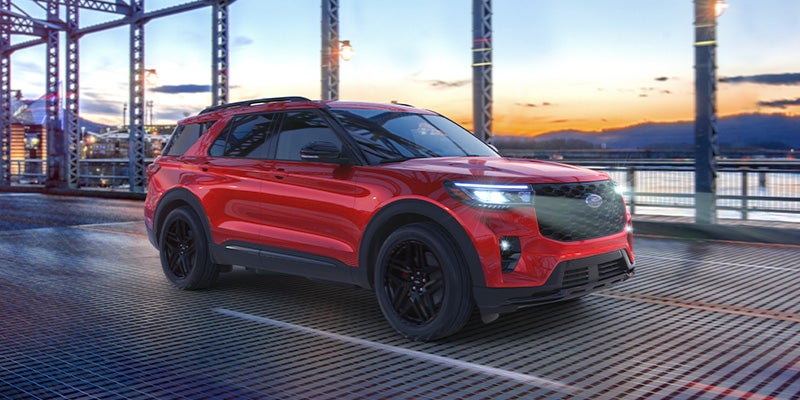
A red 2025 Ford Explorer.

Discover the All New 2025 Ford Explorer

The 2025 Ford Explorer is a fantastic family vehicle providing lots of comfort, incredible technology, and a great ride quality that'll appeal to a wide variety of drivers. Its redesigned cabin and new Ford Digital Experience make it a car that you'll want to be behind the wheel of. Comfortable Soft Touch Cabin The Explorer has a comfortable and highly functional cabin. There are soft touch materials everywhere from the dashboard to the door panels, and the dash has been redesigned to give the front seat passengers more space to enjoy. It's easy to get in and out of all the rows, including the third; just press a button, and the second-row seats will get out of the way. The driver gets to enjoy a standard 10-way power driver's seat on the base trim and ST-Line. The other two trims have an 8-way power driver's seat instead.  Front passengers get to relax in a 4-way, 6-way, or 8-way power passenger seat depending on the trim. First-row heated seats are standard in the first two trims, while the top two trims have heated and ventilated seats in the front row. Second-row heated seats are standard on all but the base trim. more A Plethora of Safety Tech The Explorer's base trim has standard Ford Co-Pilot360 Assist+, and the rest of the trims have Ford Co-Pilot360 Assist 2.0. Both of these packages pack your car full of driver assistance features to help you stay safer whether you're driving forward, parking, or changing lanes. A Blind Spot Information System with Cross-Traffic Alert, a Lane Keeping System, and Forward Collision Warning with Automatic Emergency Braking are some of its standard features. Composed Handling and Ride Quality If you're looking for a vehicle with a comfortable ride, then the Explorer is definitely it. Its handling is predictable and composed, and you won't find any problems with the vehicle's ride quality, either. It provides a nice, easy ride for the whole family, but the ST trim is ready and waiting for drivers who'd like a more athletic ride. The ST has a three-liter V6 engine producing 400 horsepower and 415 lb-ft of torque, giving the car more oomph than the 300-hp 2.3-liter four-cylinder engine that's standard in the other trims. Ample Entertainment The Explorer has all the standard infotainment technology you've come to know and love. Wireless smartphone connectivity, a five GLT Wi-Fi hotspot, and SiriusXM give it plenty of entertainment and connectivity features. However, there's also a new Ford Digital Experience that adds a ton more personalization and access to incredible entertainment features such as gaming and YouTube streaming. Want to check out the technology and performance features of the Explorer? Come test drive it at Family Ford of Bluffton in Bluffton, IN.

4 Versatile Features of the 2025 Ford Maverick

The 2025 Ford Maverick stands out because its versatility comes from systems that broaden how the truck can be used, not from trying to imitate a larger pickup. Shoppers looking at the Maverick are usually trying to solve a specific problem. They want truck capability, but they also want a vehicle that is easy to drive every day, manageable in tighter spaces, and flexible enough to support work, towing, seasonal weather, and weekend use. That is why the most important features in the 2025 Ford Maverick are the ones that expand its role across different situations. The Maverick works best when its features are understood as practical tools. Hybrid AWD changes who the truck fits. Towing technology changes how approachable truck capability feels. Compact dimensions change daily usability. Bed utility changes what the truck can support after you arrive. Together, those systems explain why the 2025 Ford Maverick is more than a smaller alternative to a full size pickup. Hybrid AWD expands what the 2025 Ford Maverick can handle One of the most important versatility upgrades in the 2025 Ford Maverick is the availability of Hybrid AWD. Hybrid AWD means the Maverick combines the fuel saving advantages of the hybrid powertrain with the added traction support of all wheel drive. That matters because compact truck buyers often want efficiency, but they do not always want to give up weather confidence or broader year round usability to get it. In the Maverick, this system changes the truck from something that mainly appeals to drivers focused on mileage into something that also makes sense for drivers dealing with rain, light snow, gravel roads, and mixed surface driving. The feature is versatile because it broadens the truck’s range of suitable use cases. A front wheel drive hybrid can still work well for many drivers, but Hybrid AWD gives the 2025 Ford Maverick a stronger answer for buyers who want commuter efficiency without limiting where or when they feel comfortable driving. more That technical difference matters most when traction becomes part of daily life instead of an occasional inconvenience. A buyer commuting through changing Indiana weather, leaving a wet job site, or using the truck for weekend travel on less predictable surfaces should look at Hybrid AWD as more than a box on a spec sheet. It changes how confidently the 2025 Ford Maverick can apply power when conditions are less stable. It also helps resolve one of the biggest compact truck tradeoffs, which is the fear that choosing efficiency means narrowing capability. Buyers evaluating this feature should think carefully about how often their truck will be used in changing surface conditions and whether they want the lower operating feel of a hybrid without sacrificing traction support. That is the real value of Hybrid AWD in the 2025 Ford Maverick. It makes the truck more adaptable without making it feel oversized or overbuilt. Towing confidence comes from more than a capacity number The 2025 Ford Maverick can be configured to tow up to 4,000 pounds, but towing versatility is not just about the maximum number. It is about whether the truck makes towing approachable enough that a buyer will actually use that capability. This is where the Maverick’s trailer technology matters. Many truck shoppers are interested in towing small campers, utility trailers, compact boats, or light equipment, but they hesitate because hitching and backing a trailer can feel like a separate skill set. The 2025 Ford Maverick addresses that concern with available Pro Trailer Hitch Assist and Pro Trailer Backup Assist. These systems are important because they reduce the complexity that often makes towing feel more intimidating than it needs to be. Pro Trailer Hitch Assist helps align the 2025 Ford Maverick with the trailer more precisely during hookup. Pro Trailer Backup Assist is designed to simplify backing a trailer by helping the driver guide trailer movement with more control. Together, these features do something more useful than simply adding technology. They reduce the skill barrier that keeps some buyers from using truck capability in the first place. This is where the Maverick becomes especially versatile for first time truck buyers or crossover owners moving into a pickup for the first time. The feature set supports a buyer who wants towing ability but does not want to jump immediately into a larger truck with a steeper learning curve. It is one thing for a truck to be capable of towing. It is another for that truck to help its driver feel more comfortable doing it. A buyer should evaluate towing in the 2025 Ford Maverick by asking three things: What trailer weight will I realistically tow most often How often will I need to hitch or back up without assistance from another person Do I want truck capability that feels manageable instead of specialized That is the practical advantage here. The Maverick’s towing systems support everyday usability, not just occasional bragging rights. The compact size is part of the Maverick’s functionality A lot of shoppers still approach trucks with the assumption that larger automatically means better. The 2025 Ford Maverick challenges that idea by making size part of its versatility. The Maverick is easier to maneuver, easier to park, and easier to live with day to day than a full size truck, and those differences are not minor. They shape whether the vehicle feels practical enough to use all week rather than only when a truck specific task comes up. This matters because many buyers do not need a truck that is optimized for maximum towing every day. They need one that can move comfortably through traffic, fit into parking areas more easily, and still provide open bed utility when needed. The 2025 Ford Maverick makes that possible because its dimensions support a more crossover-like ownership experience without removing truck usefulness. That combination changes the buying decision. Instead of asking whether the Maverick matches the biggest truck in every category, the better question is whether it covers the duties a buyer actually has. For many drivers, the answer is yes. The Maverick is capable enough for home projects, occasional hauling, light towing, and outdoor gear, while still being easier to handle than a larger pickup in tighter spaces and everyday driving situations. This section is where the buyer tension becomes clear. A bigger truck may provide more maximum capability, but it may also introduce daily inconvenience that a buyer does not actually want. The 2025 Ford Maverick earns its versatility by choosing a different balance. It gives up some upper-end truck extremes in order to be more usable, more approachable, and more comfortable as an everyday vehicle. What makes the Maverick bed more useful than it first appears Versatility in a truck also depends on what the bed can do once the truck reaches the worksite, driveway, trailhead, or campground. The 2025 Ford Maverick’s bed is useful not because it is the largest in the segment, but because it is designed to support varied tasks with more flexibility than a simple cargo box. The key concept here is bed utility as a working system. The Maverick bed includes features that make it easier to secure cargo, organize different types of loads, and power equipment when needed. Available 12V and 110V outlets matter because they turn the truck into more than a transport tool. They allow the 2025 Ford Maverick to support jobsite tools, tailgating accessories, outdoor devices, or charging needs without requiring a completely separate power solution. That changes the buyer implication significantly. A shopper who uses a truck for home projects may see the bed as a way to carry materials and power tools at the same time. A buyer interested in camping or weekend travel may value the same bed for outdoor gear and portable equipment. This is what versatility looks like in practical form. The truck supports different activities without needing to be redefined each time. The 2025 Ford Maverick bed is especially important for buyers who are coming from SUVs. Those shoppers often understand interior cargo flexibility, but they may not yet realize how much open-bed utility changes loading convenience, dirty gear management, and access to powered accessories. The Maverick gives them a truck format that feels easier to adopt because the size stays manageable while the functionality expands. Trim identity matters because versatility changes with configuration The final thing shoppers need to evaluate is that versatility in the 2025 Ford Maverick is not identical across every trim. The truck’s usefulness changes depending on how it is configured. That matters because one buyer may be looking for efficiency and all season usability, while another is focused on towing confidence, and another is more interested in a distinct handling or off pavement identity. This is where the Maverick lineup becomes more sophisticated than it first appears. Mainstream trims like XL, XLT, and Lariat cover the broad center of compact truck demand. They are where many buyers will find the best balance of comfort, features, and daily use. The Lobo moves in a different direction by emphasizing street truck character and performance feel. The Tremor moves in another direction by supporting buyers who want more confidence on rougher surfaces and unpaved routes. The feature lesson here is important. Versatility does not always mean one configuration can do everything equally well. Sometimes versatility means the lineup gives buyers multiple ways to solve different needs without leaving the Maverick platform. That is why shoppers should not evaluate the 2025 Ford Maverick only by the headline feature list. They should evaluate which version of the truck matches the work, driving conditions, and lifestyle demands they actually have. When the Maverick is viewed that way, its four most versatile features become easier to understand. Hybrid AWD broadens the truck’s seasonal and traction relevance. Trailer technology makes towing more approachable. Compact dimensions make daily ownership easier. Bed utility expands functional use after the drive begins. Those systems are what make the 2025 Ford Maverick feel adaptable instead of limited.
Contact Us

Fill out this form below and we'll contact you shortly
*Required Fields